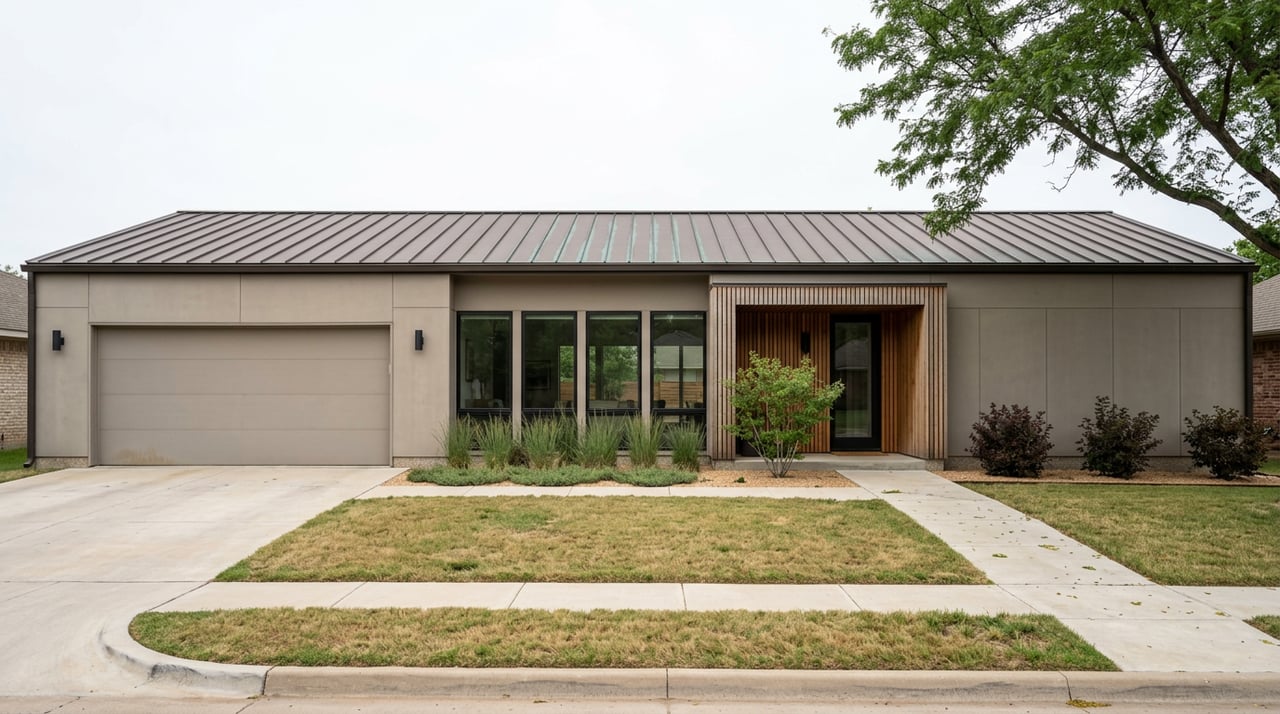
A buyer comparing an older resale in Aurora against a new build fifteen minutes away is usually running the wrong math. The list price gets all the attention. The line that actually determines what you pay every month sits lower on the tax bill, in a taxing entity most portals never mention: the metro district.
Aurora's market this fall gives buyers room to compare carefully instead of rushing. Over the three months ending in May 2026, homes here sold for a median of $462,000, down about 2.3 percent from a year earlier, with homes typically going under contract in roughly 30 days and drawing about two offers. That is not a scramble. It is a market where a buyer can sit with two addresses side by side and ask which one actually costs less to own, not just which one costs less to buy.
The Second Tax Line Nobody Puts on the Flyer
A metropolitan district is a local government entity, formed under Colorado law, that a developer sets up to finance and build the roads, water lines, sewer, and parks a new neighborhood needs before anyone lives there. The district borrows the money through bonds, then repays that debt over time through its own property tax mill levy, charged on top of whatever the county, city, and school district already collect.
The City of Aurora's Model Service Plan has applied to new metro districts since 2004, capping a district's debt repayment mills at 50 and limiting the repayment term to 40 years, protections meant to keep any single district's bond math from running away. A property inside a newer Aurora subdivision can carry its own district's operating mills, the county's mills, the school district's mills, the city's mills, and in some cases a regional authority's mills, all layered independently.
What Painted Prairie's Own Numbers Show
Painted Prairie, the master-planned community tied into Aurora's Aerotropolis growth corridor, publishes its own mill levy math for prospective buyers, and it is worth reading closely because it shows exactly how the stacking works.
For 2025, the community's total residential mill levy runs from about 168.5 to nearly 199.6 mills, depending on which of five separate Painted Prairie Metro Districts, numbered 2 through 5 and 10, happens to serve a given lot. Those district-level mills range from roughly 58.5 to 68.8 depending on the district. On top of that sits Adams County at 27.479 mills, the City of Aurora at 7.087, and Aurora Public Schools at 73.186, along with smaller regional and drainage authority charges.
The community's own sample calculation puts a $500,000 home's Adams County valuation at $35,250 after the 2025 residential assessment rate, multiplied by a total mill levy near 199.6, for an annual tax bill of roughly $7,036. That works out to about 1.4 percent of the sale price every year. For comparison, Colorado's statewide median effective property tax rate sits close to 0.50 percent. A buyer weighing a $500,000 home outside any metro district against a similarly priced home in Painted Prairie is not comparing two homes with the same carrying cost. They are comparing one home taxed near the state median and another taxed at close to three times that rate.
Not All Districts Carry the Same Story
The mill levy alone does not tell a buyer everything, because metro districts age differently, and their age changes what the money is doing.
Southshore Metropolitan District, on the south shore of Aurora Reservoir, was organized in 2002. Its residents have held a majority of board seats since May 2020, well past the developer-control phase most new districts start in. Southshore's current bonds, issued in 2020, refunded the district's earlier debt and paid for construction of the community's Lighthouse and Lakehouse amenities along with roads, water and sewer lines, and landscaping. Voters approved that borrowing 270 to 70 in a May 2018 election. This is a district that has moved through its early developer-driven phase into resident governance, with debt tied to amenities that already exist and a board answerable to the people paying the bill.
Aurora Highlands tells a different story at a different point in its life cycle. Sentinel Colorado's 2023 reporting on an Aurora City Council study session captured Mayor Mike Coffman pressing attorney Brian Matise and Aurora Highlands developer Christopher Fellows on whether the city's 50-mill debt cap was doing its job. Matise argued that a reasonable infrastructure cost per home would run around $40,000, which for the 23,000 homes developers projected in 2017 would total roughly $920 million. He said developers had borrowed more than four times that amount.
The Sentinel Colorado report quoted Matise: "This is an excessive amount of debt, and I think the City Council needs to ask, 'Why are we approving $4 billion of debt for a district where this is going to total perhaps millions of dollars or hundreds of thousands of dollars of debt per home?'"
Because Colorado metro district debt can run for up to 40 years under the model service plan, a bond structure debated years ago is not old news for a 2026 buyer. It is the schedule that buyer will likely be paying against for decades to come.
The Levy You Pay for Someone Else's Road
There is one more layer worth understanding before comparing neighborhoods: the South Aurora Regional Improvement Authority, known as SARIA. It pools an additional mill levy from 22 member metropolitan districts, plus the City of Aurora, to fund infrastructure that benefits the region rather than any single subdivision. SARIA issued $11,265,000 in bonds in 2018, using the proceeds to complete the Harvest Road improvements between Alexander and Orchard and to reconfigure the Quincy Avenue and E-470 ramp.
That means a homeowner in one south Aurora community can be paying, through their own district's ARI mill levy, for a road improvement that primarily serves traffic heading toward a different neighborhood entirely. Not every south Aurora metro district pays into SARIA. The SARIA service plan amendment FAQ says the requirement applies only to districts formed on or after 2004, so a buyer comparing two south Aurora communities needs to know not just whether a metro district exists, but when it was formed.
| Community | Formed | Board control | What the levy has funded |
|---|---|---|---|
| Painted Prairie | Recent, active build-out | Developer-led during build-out | Roads, parks |
| Southshore | 2002 | Resident-majority since May 2020 | Lighthouse, Lakehouse, roads, water and sewer |
| Aurora Highlands | Formation date not stated | Developer-led, debt under council scrutiny | Roads and infrastructure for a 23,000-home buildout |
| SARIA members | Formed 2004 or later | Mixed, district-by-district | Harvest Road, Quincy Avenue/E-470 ramp |
How to Find Your Number Before You Write an Offer
None of this shows up automatically in a portal search. Metro districts are not listed on the MLS, so the only reliable way to confirm one exists on a specific address is to pull the county tax bill and read the list of taxing entities line by line. On new construction, the tax figure attached to an MLS listing is often pulled from the year the lot was still vacant dirt, which means it can understate the real number by thousands of dollars once the home is built and fully assessed.
Colorado law has closed part of this gap. According to Mile High Title Guy, since January 1, 2024, a seller of residential property inside a metropolitan district organized on or after January 1, 2000 must give the buyer the district's official website as part of disclosure. That website is where a buyer can find the district's current mill levy, its most recent budget, and whether the board is still developer-controlled or has transitioned to residents. Reading it before writing an offer takes less time than a single showing, and it answers the one question a listing price cannot: what this home will actually cost to hold, year after year, for as long as that district's bonds remain outstanding.
Frequently Asked Questions
Does every new neighborhood in Aurora have a metro district? Not automatically, but most subdivisions built in the last two decades do, since Aurora has required new districts to follow its Model Service Plan since 2004. Older, established Aurora neighborhoods built before that framework generally do not carry one.
Will metro district taxes go down once the bonds are paid off? They can, once a district's outstanding debt is retired or refinanced at a lower rate. Debt service mills typically make up the largest share of a district's total levy, so paying down that debt is the main lever for a lower bill over time. There is no fixed timeline that applies to every district, since it depends on that district's own bond schedule.
How do I find out if a resale home I'm considering sits in a metro district? Pull the property's current tax bill from the county assessor and look at the full list of taxing entities. If a metro district is included, the bill will show it as its own line item alongside county, city, and school taxes.
Comparing two Aurora addresses on price alone leaves out the number that determines what you actually pay each month. If you are weighing a resale against new construction anywhere in Aurora, Shelley Welliver can pull the specific tax and district history for any address you're considering before you write an offer. Schedule a free consultation to start the comparison.
This article is general information, not legal, tax or financial advice. Consult a qualified professional about your situation.